

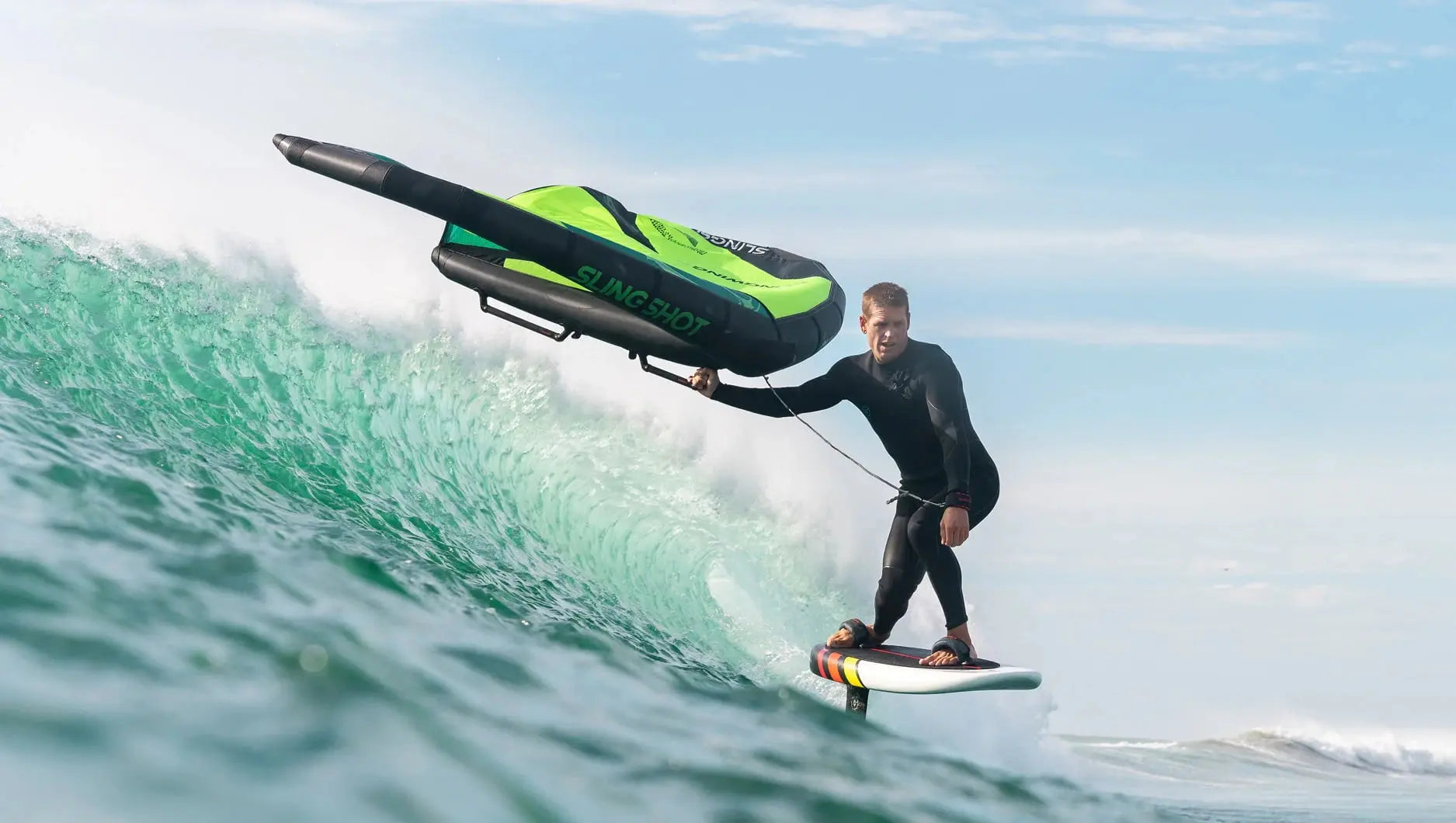
Short answer: wingfoiling and windsurfing both use wind to move across the water, but the equipment, technique, and overall riding experience are very different.
If you are new to wind-powered watersports, or you are deciding which discipline makes the most sense for you, understanding these differences will save you time, frustration, and money. Below, we break down wingfoiling vs windsurfing in a clear, practical way so you know exactly what sets them apart.
Important note: Jupiter Watersports does not carry windsurfing gear. We specialize in wingfoiling, kitesurfing, and foiling equipment, but this comparison is provided for education and clarity.
What Is Wingfoiling?

Wingfoiling uses a handheld inflatable wing and a foil-equipped board. The wing is not attached to the board. Instead, the rider holds it directly and controls power by changing its angle to the wind.
Once moving, the hydrofoil lifts the board above the water, reducing drag and allowing riders to glide smoothly even in lighter wind.
Key characteristics of wingfoiling:
- Handheld wing, not fixed to the board
- Board rides on a hydrofoil
- Can be depowered instantly by releasing the wing
- Commonly ridden on lakes, bays, and ocean
What Is Windsurfing?

Windsurfing uses a rigid sail attached to a mast and boom, which is mounted directly to the board. The rider controls the sail by holding the boom and adjusting body position to manage power.
Traditional windsurf boards stay on the water’s surface and use a fin for tracking, although a separate discipline called windfoiling exists. Classic windsurfing remains surface-based.
Key characteristics of windsurfing:
- Sail mounted directly to the board
- Rigid mast and boom system
- Board stays on the water
- Requires sail trimming and balance at all times
Wingfoiling vs Windsurfing: Side-by-Side Comparison
| Feature | Wingfoiling | Windsurfing |
|---|---|---|
| Power Source | Handheld inflatable wing | Sail mounted to board |
| Board Type | Foil board | Planing board with fin |
| Lift | Hydrofoil lifts board above water | Board stays on surface |
| Learning Curve | Generally more approachable | Steeper, more technical |
| Wind Range | Works well in lighter wind | Needs stronger, steady wind |
| Depowering | Instant, simply let go | Requires sail control |
Control and Riding Feel
One of the biggest differences is how each sport feels on the water.
Wingfoiling feels light, quiet, and smooth once you are foiling. Because the wing is handheld, power adjustments are quick and intuitive. Riders often describe the sensation as flying just above the water.
Windsurfing feels more connected and physical. The sail constantly pulls against the rider, and maintaining speed requires continuous trimming and balance. When fully powered, windsurfing delivers speed and control, but it demands more technique.
Which Sport Is Easier to Learn?
Wingfoiling and windsurfing both have learning curves, but the challenges are different.
Learning to wingfoil
Beginners typically start by learning to handle the handheld wing on land and in shallow water before progressing to board control.
The next challenge is getting comfortable on the board, generating enough speed and learning to lift onto the hydrofoil. This can be difficult initially because the rider must manage both the wing and a foil-equipped board.
Once a rider develops consistent foil control, transitions and longer rides can become much more enjoyable.
Learning to windsurf
Windsurfing starts with learning to balance on the board, raise the sail, steer and manage the wind's power.
Beginners generally spend time developing these fundamentals before progressing to stronger winds, harness use, planing and more advanced maneuvers.
Windsurfing may feel more physically demanding at first because the sail is connected directly to the board and requires continuous handling.
Which is easier?
Neither sport is automatically easier for everyone. Wingfoiling introduces the additional challenge of hydrofoil control, while windsurfing requires learning traditional sail handling and board control.
Previous experience with surfing, sailing, kitesurfing or board sports can influence how quickly someone progresses. Professional instruction and appropriate beginner equipment make a significant difference in both sports.
What Wind Conditions Are Best for Wingfoiling and Windsurfing?
Neither sport has one universal minimum wind speed. The amount of wind required depends on rider weight, equipment size, skill level and water conditions.
Wingfoiling
Wingfoiling can be particularly appealing in moderate and relatively light wind when paired with an efficient foil, an appropriately sized wing and a suitable board. Once the foil lifts out of the water, drag decreases significantly, allowing the rider to maintain a smooth glide.
However, getting onto foil still requires enough power and technique. Very light or inconsistent wind can make learning and maintaining flight difficult.
Windsurfing
Traditional windsurfing can be enjoyed in a wider variety of conditions than many beginners expect. Larger boards and sails allow riders to get moving in lighter wind, while smaller boards and sails are commonly used as the wind increases.
For planing performance, consistent wind is particularly valuable. Stronger wind can deliver exciting speed and acceleration, but also demands greater control and experience.
The bottom line: Wingfoiling has an advantage in certain lighter-wind conditions because of hydrofoil efficiency, while windsurfing offers a broad range of equipment choices for adapting to different wind strengths.
How Much Does Wingfoiling vs. Windsurfing Cost?
The initial equipment investment for either sport can be significant, and the total cost depends on the quality of the equipment, whether it is new or used, and how many conditions you want to cover.
Wingfoiling equipment costs
A complete beginner setup typically includes:
- Wingfoil board
- Hydrofoil assembly
- Handheld inflatable wing
- Wing pump
- Appropriate leashes and safety equipment
One advantage is that the wing can be deflated and packed away, making transportation and storage relatively convenient.
However, riders may eventually want additional wing sizes, different foil front wings or another board to expand their usable wind range.
Windsurfing equipment costs
A complete beginner setup typically includes:
- Windsurfing board
- Sail
- Mast
- Boom
- Mast extension and base
- Harness and appropriate safety equipment
Windsurfing equipment can become more specialized as riders progress. Different sail sizes, boards and rigging combinations allow experienced riders to adapt to a wider range of conditions.
Which is more affordable?
There isn't a universal winner. Both sports can be expensive when purchasing new, premium equipment and multiple setups.
The best comparison is the cost of a complete setup appropriate for your weight, ability and local conditions, rather than comparing the price of one wing against one sail.
Advantages and Disadvantages of Each Sport
Why choose wingfoiling?
Wingfoiling is appealing to riders who enjoy the sensation of hydrofoiling, want a relatively compact equipment setup and appreciate the freedom of riding without a sail attached to their board.
The ability to release the wing to depower is another attractive feature. Wingfoiling also opens up opportunities to explore different riding styles, from relaxed freeriding to waves and freestyle.
The downside is that learning to control a hydrofoil takes time. Beginners should expect some falls and should understand the importance of foil awareness and appropriate safety equipment.
Why choose windsurfing?
Windsurfing offers a direct connection between the sail and board, creating an exciting and powerful riding experience.
It is particularly rewarding for riders who enjoy speed, acceleration, strong wind and technical sail control. There is also a long-established windsurfing community and a wide range of equipment for different conditions.
The downside is that traditional windsurfing equipment can be bulky, rigging takes time, and learning sail control and board balance requires patience.
Neither sport is inherently better. The right choice depends on what kind of experience you want on the water.
Should You Choose Wingfoiling or Windsurfing?
Consider wingfoiling if:
- You enjoy surfing, foiling or board sports.
- You want a relatively compact equipment setup.
- You like the idea of gliding above the water.
- You want to explore different foil disciplines.
- You have access to suitable wingfoiling conditions.
Consider windsurfing if:
- You enjoy traditional sail-powered sports.
- You love speed and powered riding.
- You prefer the direct connection between sail and board.
- You have access to consistent wind and suitable sailing locations.
- You enjoy mastering technical sailing skills.
What if you're completely new to both?
Try an introductory lesson in each sport before purchasing equipment. Your experience, local conditions and personal preferences may make the decision much easier than comparing specifications online.
Frequently Asked Questions
Can you wingfoil in the same conditions as windsurfing?
Sometimes, but not always. Wingfoiling can benefit from hydrofoil efficiency in lighter wind, while traditional windsurfing can perform particularly well in stronger, consistent wind. Equipment selection makes a significant difference.
Is wingfoiling harder than windsurfing?
They have different learning challenges. Wingfoiling requires learning wing control and hydrofoil balance, while windsurfing requires sail handling and board control. Neither is universally easier.
Is wingfoiling more expensive than windsurfing?
Not necessarily. Both require several pieces of equipment, and the total cost depends on equipment quality, whether it is new or used, and how many sizes are needed.
Can windsurfers transition to wingfoiling?
Yes. Existing experience with wind, water and board control can help. However, hydrofoil control and handling an independent handheld wing are new skills that require practice.
Can wingfoiling replace windsurfing?
For some riders, yes. Others enjoy both because they offer different experiences, especially in stronger winds and different water conditions.
Which sport is better for beginners?
Both can be learned with appropriate equipment and professional instruction. The best choice depends on the beginner's interests, location and access to suitable conditions.
An Important Note About This Comparison
Jupiter Watersports specializes in wingfoiling, kitesurfing and foiling equipment. We do not currently sell windsurfing equipment.
This article is intended as an educational comparison to help readers understand the differences between wingfoiling and traditional windsurfing.
Although we naturally specialize in wingfoiling and can help customers select appropriate equipment, we believe riders should understand the advantages, limitations and learning requirements of both sports before making a decision.
Our goal is to help you find the watersport that best matches your experience, interests, local conditions and budget.
Final Thoughts
Wingfoiling and windsurfing may look similar from a distance, but they are very different sports with unique equipment, techniques, and experiences. Understanding those differences helps you choose the discipline that fits your goals, conditions, and riding style.
If you are interested in wingfoiling gear, boards, or foils, the team at Jupiter Watersports is always happy to help guide you in the right direction.


