
If you’re getting into kiteboarding or looking to upgrade your gear, one of the most common questions we hear at Jupiter Watersports is:
“What kite should I buy?”
The answer isn’t as simple as choosing a popular model or the biggest kite available. The right kite depends on your weight, local wind conditions, riding style, skill level, and where you’ll be riding.
Choosing the correct equipment from the start will make learning easier, improve your progression, and most importantly, keep you safer on the water.
In this guide, we’ll break down everything you need to know before purchasing your next kite.
1. Consider the Wind Conditions Where You Ride
The most important factor when selecting a kite is the average wind speed where you’ll be riding.
Someone riding in South Florida will need different equipment than someone riding on a mountain lake or in consistently windy destinations like Cape Town.
Lighter winds require larger kites to generate enough power, while stronger winds call for smaller kites that remain comfortable and controllable.
Typical Florida Kite Sizes
Most Florida riders build a quiver around:
- 9m
- 10m
- 11m
- 12m
- 13m
- 14m
These sizes cover the majority of riding conditions you’ll encounter throughout the year.
If you only own one kite, choosing the correct size for your local conditions is especially important.
2. Your Weight Matters More Than You Think
Your body weight has a major impact on kite selection.
A 140-pound rider and a 220-pound rider won’t use the same size kite in identical wind conditions.
Generally:
- Lighter riders can comfortably use smaller kites.
- Heavier riders often need larger kites to generate enough power.
Because every rider is different, it’s always best to speak with experienced local riders or a knowledgeable kite shop before purchasing.
At Jupiter Watersports, we help customers match kite size to both their weight and the conditions they ride most often.
3. Match Your Kite to Your Skill Level
Not every kite is designed for every rider.
One of the biggest mistakes beginners make is buying equipment designed for advanced riders because they hope they’ll “grow into it.”
In reality, the wrong kite can slow your progression and make learning significantly more difficult.
Beginner Riders
For most new kiteboarders, we recommend starting with a Bow Kite.
Bow kites offer:
- Excellent depower
- Predictable handling
- Easier relaunch
- Better stability
- Increased safety
These characteristics make them ideal for learning and building confidence.
Intermediate Riders
As your skills improve, you may begin exploring more specialized kite designs depending on your riding goals.
Advanced Riders
Advanced riders often choose Hybrid Kites or performance-oriented models designed for specific disciplines such as freestyle, waves, or foiling.
These kites provide quicker turning, more responsiveness, and greater performance, but require more rider input and experience.
4. Think About Where You’ll Ride
The location where you ride plays a huge role in selecting equipment.
Ask yourself:
- Will you be riding on the ocean?
- Are you riding on a lake?
- Will you mostly ride flat water?
- Do you enjoy waves?
Ocean riding often involves swell, currents, and changing wind conditions.
Flat-water riding allows riders to focus more on progression, tricks, and freestyle.
Wave riders typically prefer kites that drift well and remain stable while surfing.
Matching your equipment to your local conditions makes every session more enjoyable.
5. Choose a Kite That Matches Your Riding Style
Different riders have different goals.
Ask yourself what type of riding excites you most.
Cruising
If your goal is simply enjoying time on the water, comfort and stability are priorities.
Big Air
Love boosting huge jumps?
Look for kites specifically designed for excellent lift, hang time, and powerful boosting.
Popular options include the Duotone Rebel, one of the industry’s premier Big Air kites.
Wave Riding
Wave riders often prioritize drift, responsiveness, and smooth turning.
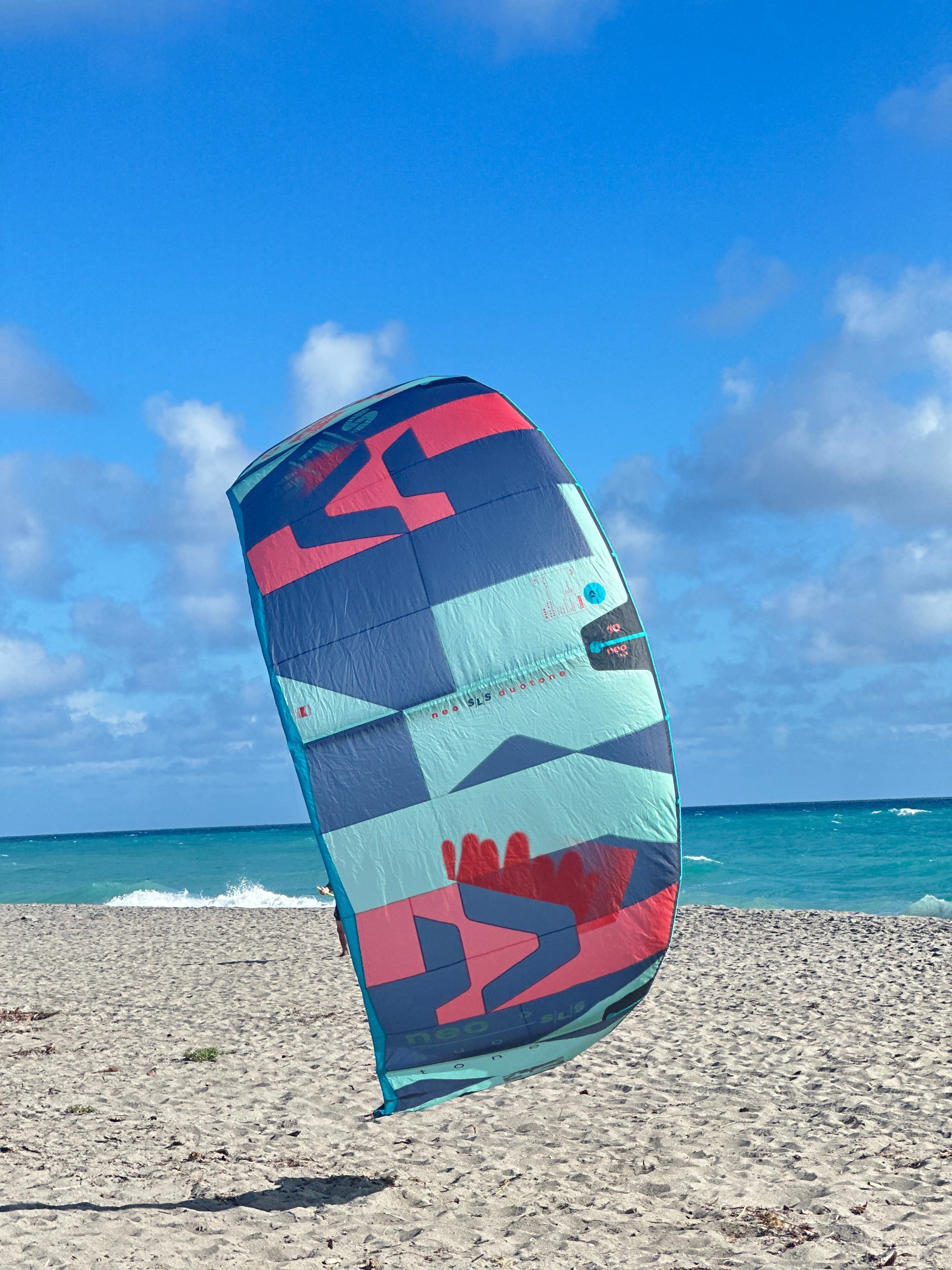
Models like the Duotone Neo have become favorites for dedicated surf riders.
Foiling
Foil riders typically look for lightweight kites with excellent drift and efficient low-end power.
Light Wind Riding
If your local spot frequently sees lighter winds, kites like the Duotone Juice are specifically designed to maximize sessions when others stay on the beach.
Don’t Forget the Rest of Your Kiteboarding Setup
Your kite is only one piece of the equation.
A complete setup should include:
- Kite
- Control Bar
- Manual Pump
- Kiteboard
- Harness
- Kite Leash
- Impact Vest
- Kite Safety Knife
- Helmet
- Board bindings
Many beginner riders choose a twin-tip board around 140 cm, although the ideal size depends on rider weight and experience.
Having properly matched equipment creates a safer and more enjoyable learning experience.
Common Mistakes New Kiteboarders Make
Every season we see riders make the same purchasing mistakes.
Buying Advanced Gear Too Soon
Many beginners purchase freestyle or competition kites because they believe they’ll progress faster.
Instead, they often end up struggling with equipment that isn’t designed for their current skill level.
Trying to Save Money on the Wrong Equipment
Buying an old kite or mismatched control bar can become expensive if the equipment isn’t compatible or needs repairs.
Safety systems have evolved significantly over the years, making newer equipment both safer and easier to use.
Buying Without Local Advice
The best kite for someone in another state may not be the best kite for Florida.
Working with experienced local riders ensures you’re buying equipment suited for your conditions.
Our Recommended Kite Brands
At Jupiter Watersports, we’ve spent years helping riders choose equipment that fits their goals and local conditions.
Some of our favorite brands include:
Duotone Kiteboarding
An industry leader offering exceptional options for beginners through professional riders.
Popular models include:
- Evo - All Around Freeride.
- Neo – Excellent for wave riding.
- Rebel – Outstanding Big Air performance with incredible hang time.
- Juice – Designed for maximizing light wind sessions.
CORE Kiteboarding
CORE kites are known for premium construction, exceptional performance, and impressive versatility.
They’re an excellent choice for riders looking for high-quality all-around equipment.
Ozone
Ozone produces dependable, high-performance kites that excel in multiple riding disciplines.
F-ONE
F-ONE continues to build innovative kites that perform exceptionally well for freeriding and progression.
Frequently Asked Questions
What size kite should I buy?
The best kite size depends on your weight, average wind conditions, and riding experience. Most Florida riders own kites between 9m and 14m, but your ideal setup may differ.
Is a Bow Kite good for beginners?
Yes. Bow kites offer excellent depower, stability, and forgiving handling, making them one of the best choices for new kiteboarders.
Should I buy one kite or multiple kites?
Many riders eventually build a quiver of multiple kite sizes to cover different wind conditions. If you’re starting with one kite, choose a size that matches the conditions you’ll ride most often.
Can I use any control bar with any kite?
Not always. Different manufacturers use different safety systems and line configurations. It’s important to ensure your control bar is compatible with your kite.
What’s the biggest mistake beginners make?
Choosing equipment that’s too advanced. A beginner-friendly kite will help you learn faster, stay safer, and enjoy the sport more.
Find the Right Kite at Jupiter Watersports
Choosing the right kite doesn’t have to be overwhelming. At Jupiter Watersports, our experienced team rides the same conditions you do and can help match you with the perfect setup based on your weight, skill level, local wind conditions, and riding goals.
Whether you’re purchasing your very first kite, upgrading to a performance model, or building a complete quiver, we’re here to help you make the right investment the first time.
Stop by our Jupiter showroom, give us a call, or shop online to explore our selection of Duotone, CORE, Ozone, F-ONE, and more. We’ll help you spend less time guessing and more time riding.


