

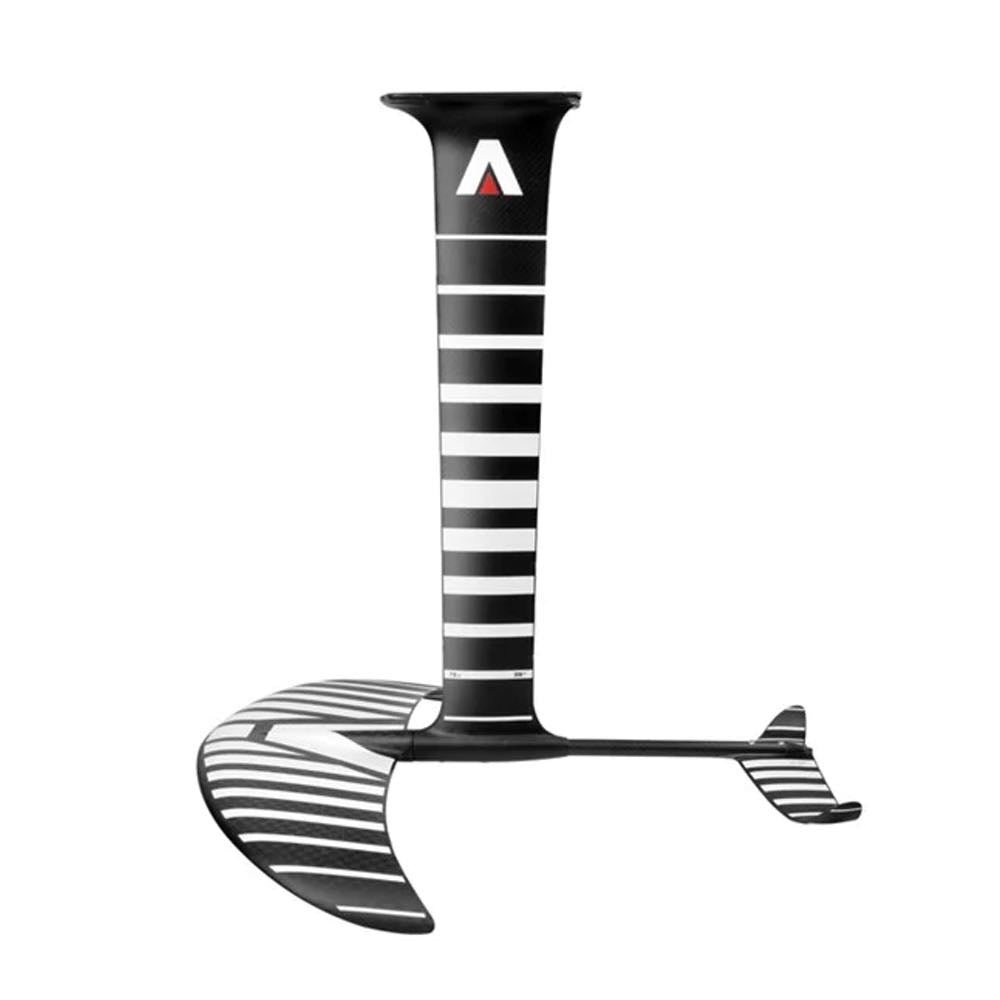
If you are new to foiling, the gear can look overwhelming at first. Masts, fuselages, front wings, rear wings, and complete kits all get mentioned interchangeably, which often leads to confusion. The reality is simple. Every hydrofoil, regardless of discipline, is built from the same core components. Understanding how each part works will help you choose the right setup and progress faster on the water.
In this guide, we break down the core foil components, explain what each one does, and show why many riders choose complete hydrofoil kits instead of mixing parts individually.
What Makes Up a Hydrofoil System?
A hydrofoil system is designed to lift the board above the water, reducing drag and creating a smooth, efficient ride. While brands may vary in design and materials, the structure remains consistent across wing foiling, kite foiling, and other foil disciplines.

Every hydrofoil system is made up of four primary components:
- Foil mast
- Foil fuselage
- Front wing
- Rear wing (also called a stabilizer)
Each part plays a specific role in stability, lift, speed, and control.
Foil Mast
The hydrofoil mast connects the board to the foil assembly below the water. It determines how high you ride above the surface and plays a major role in stability.
Shorter masts are often preferred by beginners because they feel more forgiving and make it easier to recover from mistakes. Longer masts offer better performance in chop and swell, but they require more balance and control.
Key things the mast affects:
- Ride height above the water
- Stability and control
- Ability to handle rough conditions
Foil Fuselage
The foil fuselage is the horizontal piece that connects the front wing and the rear wing. It acts as the backbone of the foil system and strongly influences how the foil feels while riding.
Longer fuselages provide more stability and smoother control, making them ideal for learning. Shorter fuselages create a more responsive and maneuverable ride, which advanced riders often prefer.
The fuselage directly impacts:
- Turning radius
- Pitch stability
- Overall balance of the foil
Front Wing
The front wing is the main source of lift. Its size, shape, and surface area determine how easily the foil rises out of the water and how it performs once flying.
Larger front wings generate lift at lower speeds, making them perfect for beginners and lighter wind conditions. Smaller front wings are faster and more agile, but they require better technique and higher speeds.
Front wing choice affects:
- Lift and takeoff speed
- Glide and efficiency
- Speed and maneuverability
Rear Wing (Stabilizer)
The rear wing, often called the stabilizer, balances the front wing and keeps the foil stable. While smaller than the front wing, it plays a critical role in how controlled and predictable the foil feels.
A larger stabilizer adds stability and smoothness, which is helpful for learning. Smaller stabilizers allow for tighter turns and a more playful ride, but they demand precise control.
The rear wing influences:
- Pitch control
- Stability at speed
- Overall riding feel
Why Foil Components Are Often Sold as Kits
For many riders, especially those getting started, choosing individual foil components can lead to compatibility issues or poorly matched setups. This is why complete hydrofoil kits are so popular.
Hydrofoil kits include all the core foil components that are designed to work together. This removes the guesswork and ensures proper balance, performance, and safety.
Benefits of choosing a complete kit include:
- Guaranteed compatibility between parts
- Proper balance for learning and progression
- Better overall value compared to buying parts separately
You can explore properly matched setups in our Hydrofoil Kits collection.
Choosing the Right Foil Setup for Your Riding Style
While all hydrofoils share the same core components, the ideal setup depends on how and where you ride. Wing foilers often prioritize lift and stability for lighter wind conditions. Kite foilers may prefer faster, more compact setups that respond quickly.
Starting with a balanced foil kit allows you to learn efficiently. As your skills improve, you can fine-tune individual components to match your riding style and conditions.
Final Thoughts
Understanding the core foil components helps you make smarter gear decisions and progress faster on the water. While each part has a specific role, the way they work together matters most. That is why many riders choose complete hydrofoil kits when building their first setup.
If you have questions about foil components or need help selecting the right kit, the team at Jupiter Watersports is always happy to guide you toward the best option for your goals and riding conditions.


